
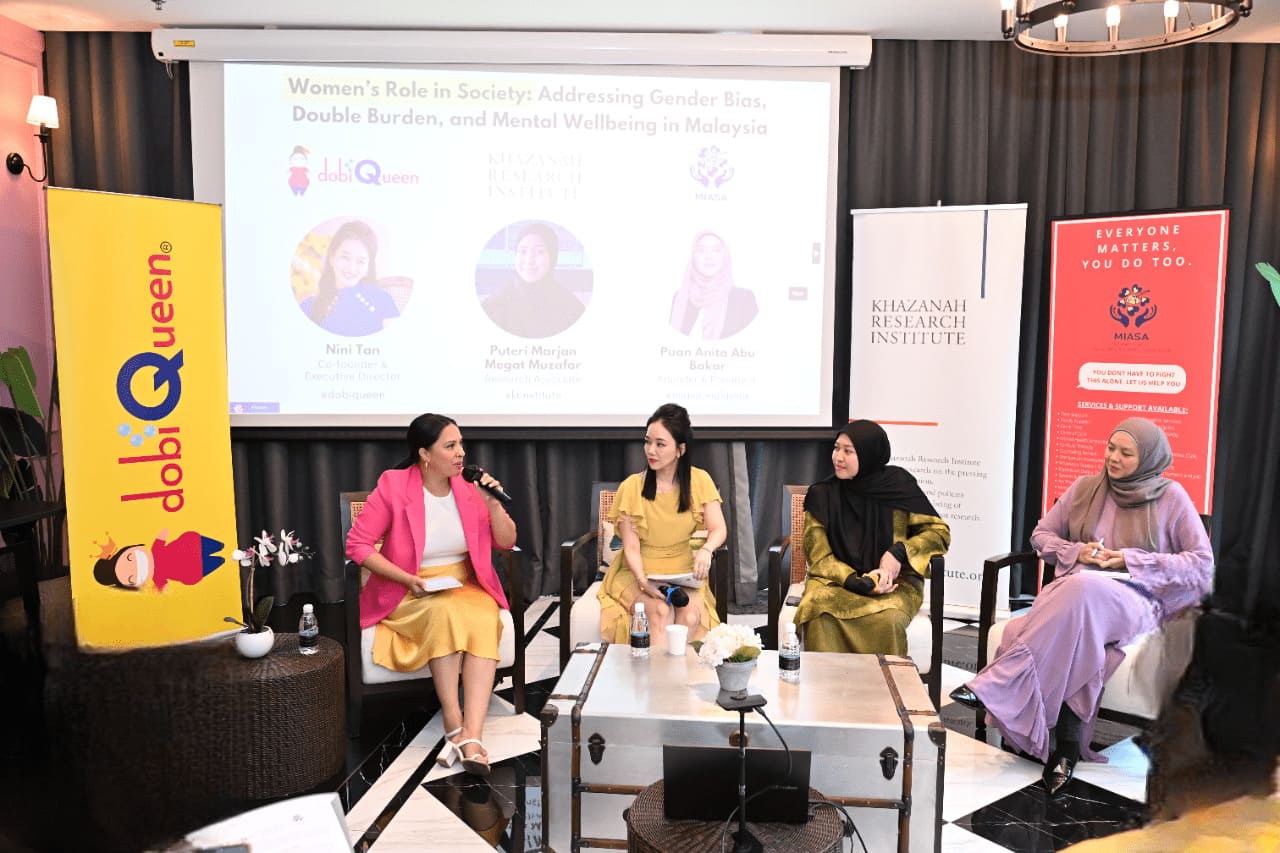
In an engaging session hosted by leading self-service laundrette, dobiQueen, with expert panellists on the topic, “Women’s Role in Society: Addressing Gender Bias, Double Burden & Mental Wellbeing in Malaysia”, many key insights were shared.
The Khazanah Research Institute (KRI) revealed that women’s educational attainment has improved and is on par with men, comprising 52% of those with tertiary education, yet they represent only 37.7% of the labour force. In terms of skilled jobs, women represent half of professionals (50.1%) but remain underrepresented in key leadership positions as managers (25.4%) and as technicians and associate professionals (29%).
“Social norms influence gender outcomes, including economic participation. Traditional gender roles persist, with men seen as the primary breadwinners and women expected to be the caregivers, which leads to gender inequality.
“These long-standing norms can limit women’s career aspirations and opportunities. Of those outside the labour force, 62.1% of women cite household chores and family responsibilities as the primary reason for not working,” said Puteri Marjan Megat Muzafar, Research Associate of the Khazanah Research Institute (KRI).
In addressing gender roles and bias, women are performing five times more unpaid household care work than men. From cleaning and caregiving to meal preparation and more, these “unseen” tasks are crucial to daily life but remain excluded from traditional economic measures.
dobiQueen echoes this with a recent consumer survey revealing that 75% of laundromat users are women, with the majority of its demographic consisting of women—50% in full-time employment and 50% homemakers.
“With only 25% of the user demographic being men, this indicates that a majority of women take on a significant load of household chores such as laundry, cooking, and others,” said Co-founder and Executive Director of dobiQueen, Nini Tan.
Despite their increasing contributions to the formal economy, women are still expected to manage household and caregiving responsibilities. A lack of support and flexibility in the workplace prevents many from fully participating in the labour force.
According to a survey on mental health and wellness conducted by Rakuten Insight in Malaysia in May 2022, 54% of female respondents indicated that they had experienced higher levels of stress or anxiety in the past 12 months.
“Women often bear significant caregiving responsibilities, which can result in caregiver fatigue and burnout, leaving little time for self-care. Persistent gender inequality in the workplace—marked by pay disparities, limited opportunities for advancement, and inadequate recognition—intensifies frustration and diminishes self-worth.
“In addition, societal expectations impose unrealistic standards on women regarding success, appearance, and behaviour, which can lead to feelings of inadequacy, anxiety, and depression,” said Puan Anita Abu Bakar, Founder and President of the Mental Illness Awareness & Support Association (MIASA).
Malaysia aims to become a high-income nation with resilient, self-determined families, aligning with the SDG 2030 goals of inclusiveness and gender equality. To achieve this, supporting women’s physical and mental well-being is crucial, as nation-building starts at home.
KRI emphasised the importance of a support system for childcare and empowering women. While the three-generation or extended family arrangement has been in decline over the past four decades, more alternative care arrangements can be made to support working mothers.
“In the interest of promoting and safeguarding the emotional well-being of women, MIASA further advocates for flexible work arrangements, which may include part-time positions, job sharing arrangements, compressed workweeks, on-site childcare, and robust family leave policies. These measures empower women to take necessary time off without fear of job loss and reinforce a supportive and high-trust workplace culture. These measures are also evidence-based, as numerous studies worldwide have highlighted associations between firm family leave policies and increased well-being and job satisfaction among working women,” said Puan Anita.
When it comes to alleviating actual household burdens, dobiQueen advocates sharing household responsibilities more equitably. This redistribution of chores not only eases stress and prevents burnout but also fosters a more balanced lifestyle.
“We salute the majority of women who keep the household going. Our goal is to reduce household chores for working adults and give them back precious time to spend with family and friends.
“Customers can plan ahead with dobiQueen’s app and enjoy seamless laundromat experiences, such as our Express Same Day Delivery, which returns clean and perfumed clothes to our customers within six hours, or our Drop-off & Pickup service, which gives our customers an hour or more of leisure time while we handle their laundry.
“Our Outlet Supervisors are also on hand to handle everything for our customers—from putting laundry into the washer, transferring it to the dryer, folding it, and finally delivering the clean laundry back to their homes as part of our 6-Hour Express Delivery initiative,” said Nini Tan.
To learn more about dobiQueen, visit its website at www.dobiqueen.my or follow it on its social media platforms, Facebook and Instagram (@dobiqueen), to stay tuned for upcoming promotions and contest giveaways for all patrons to enjoy.
This coming 23rd and 24th of November, MIASA Malaysia will be organising the International Stigma Conference 2024. This conference is more than just an event—it’s a platform for change, a space for dialogue, and a beacon of hope. dobiQueen is a proud supporter of this conference. For enquiries, sponsorship opportunities, and ticket packages, email MIASA at ISC2024.miasa@gmail.com or contact +60379321409 (HQ).