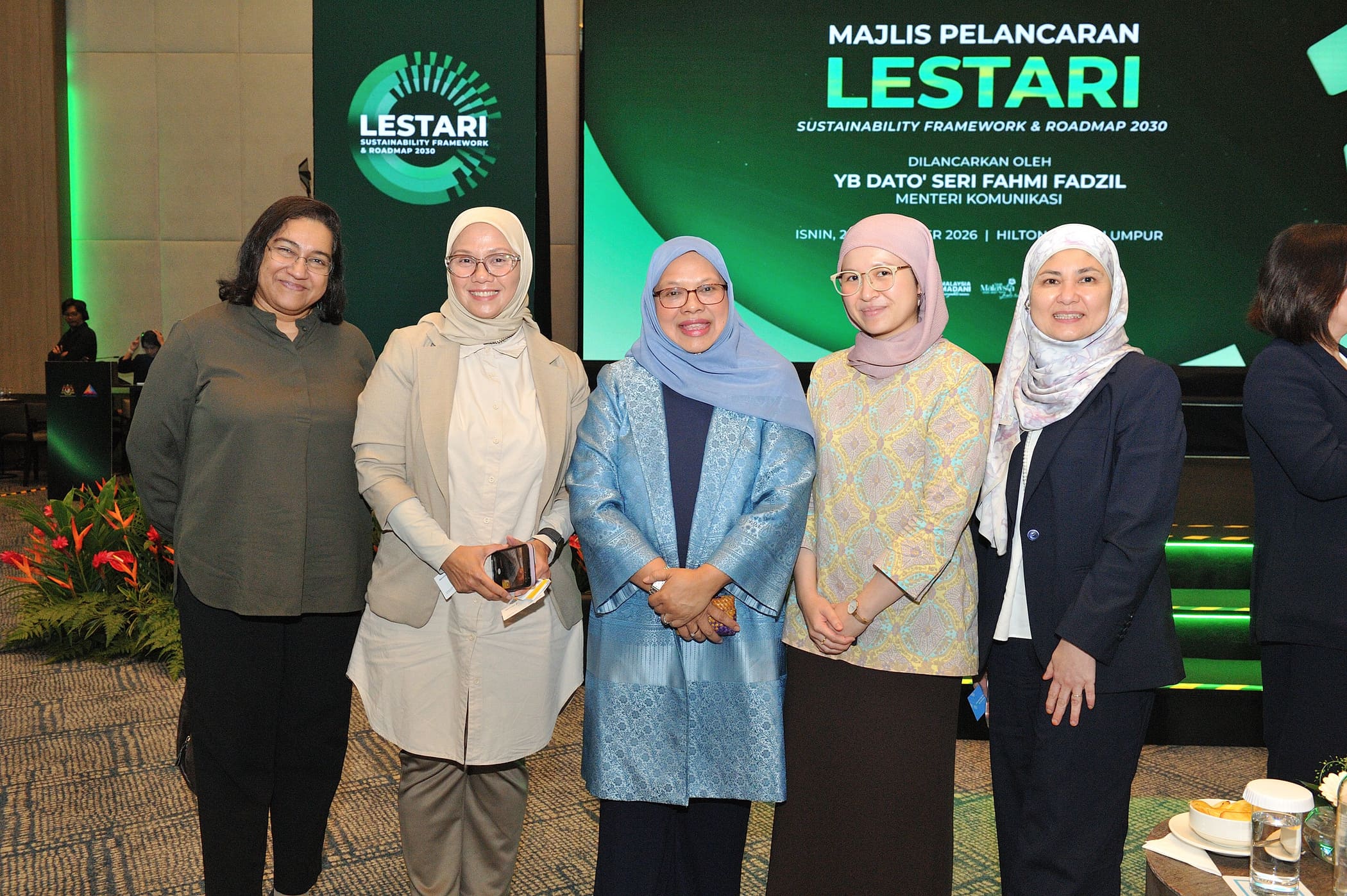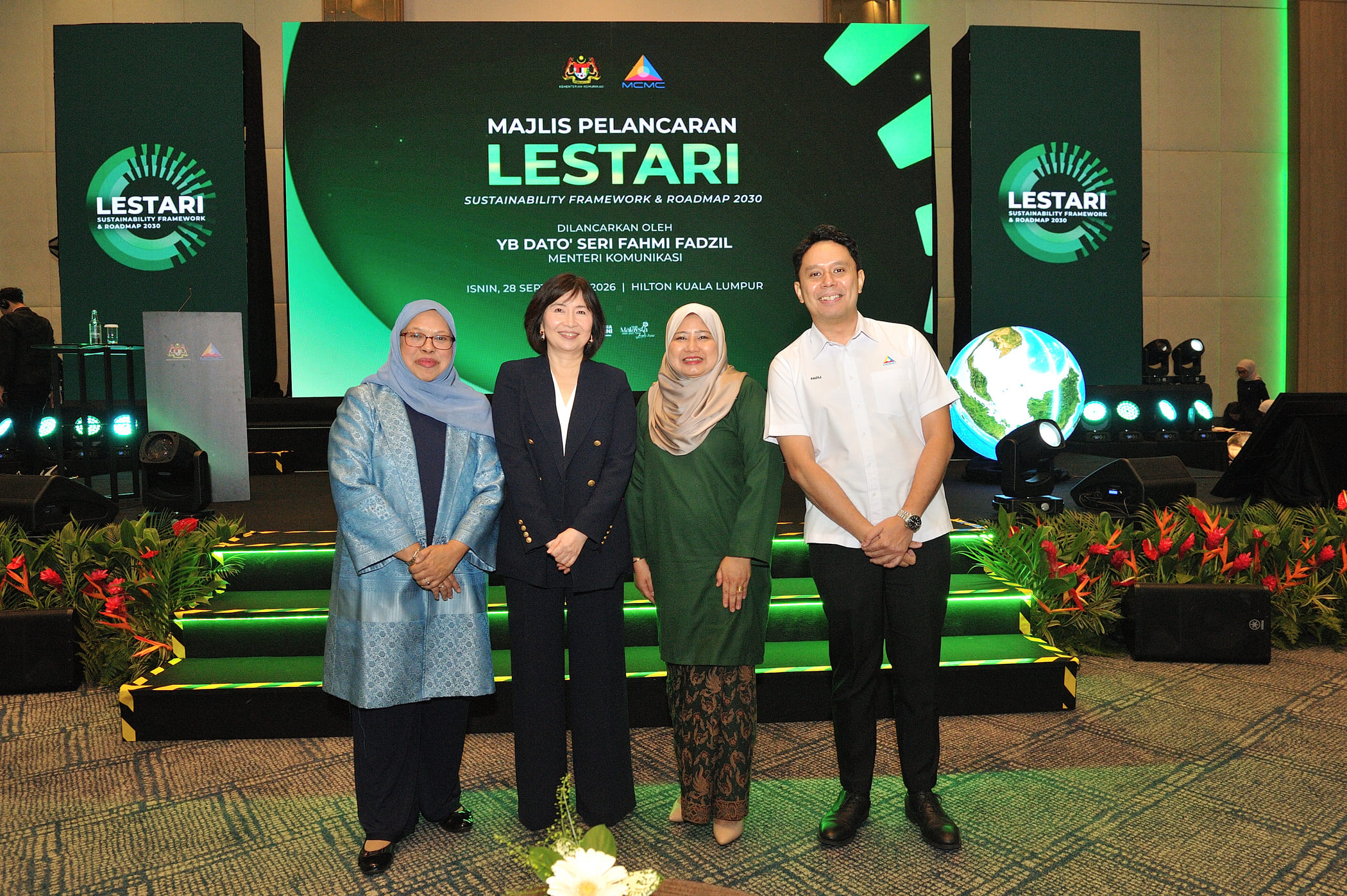
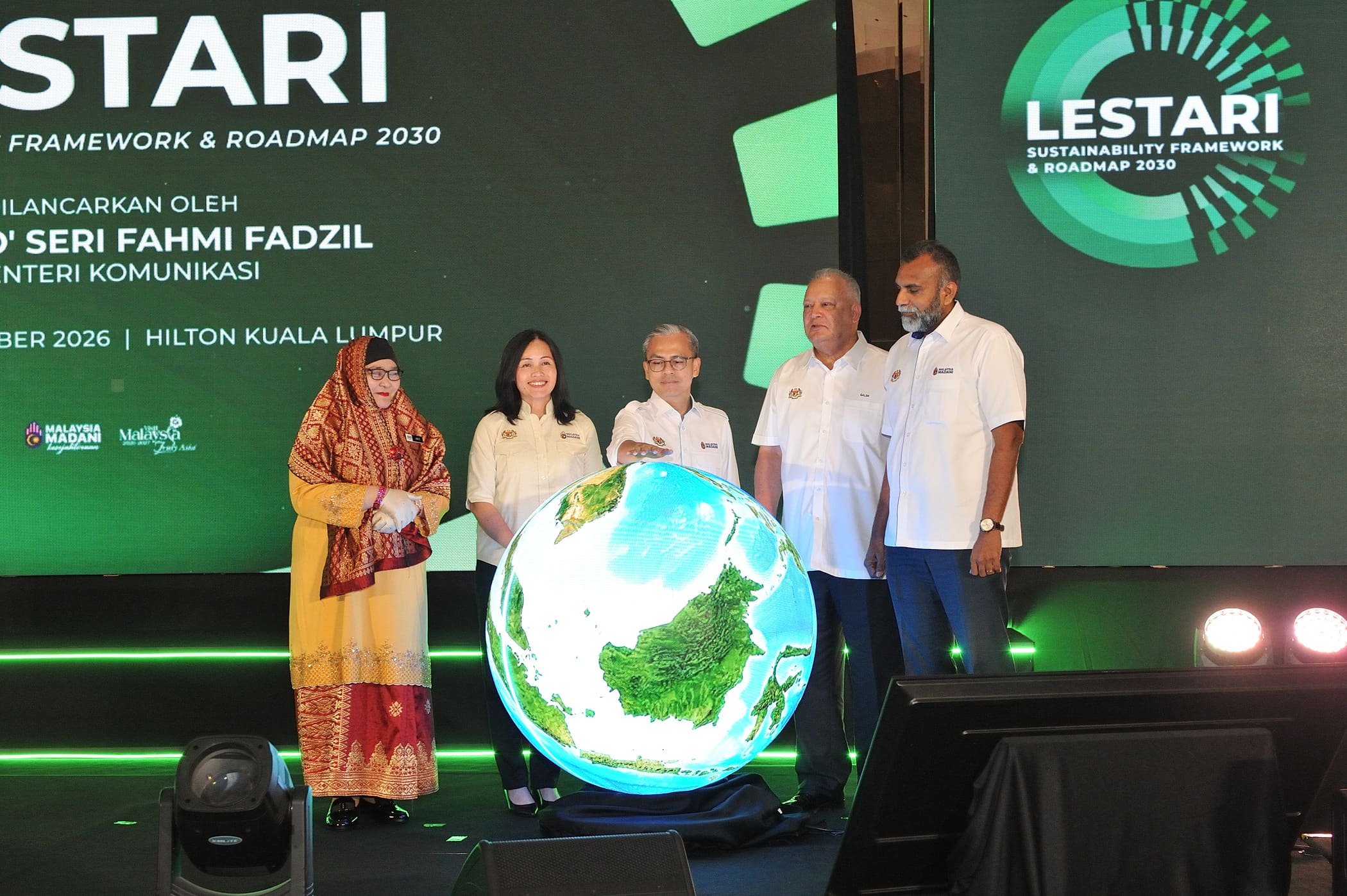
The Minister of Communications, YB Dato’ Seri Fahmi Fadzil, today officiated the launch of LESTARI: Sustainability Framework and Roadmap 2030 (SFR2030), the strategic framework of the Malaysian Communications and Multimedia Commission (MCMC) that sets the sustainability direction for the telecommunications, broadcasting, as well as postal and courier sectors towards 2030.
Through LESTARI, MCMC, together with industry players, will drive actions that will create a tangible impact on the people and the environment by 2030. This initiative supports the transition of the communications and multimedia sector towards the aspiration of achieving net-zero greenhouse gas emissions by 2050, while strengthening the circular economy through reducing electronic waste, extending the lifespan of devices and increasing access to more affordable technology.

Devices that are still usable will be refurbished and reused, thereby helping to reduce the cost of device ownership and expand access to technology, particularly for vulnerable and low-income groups. By 2030, LESTARI aims to have 15 million devices managed sustainably through reuse, upgrading or replacement with more efficient technologies, as well as responsible recycling.
In addition to environmental benefits through the reduction of e-waste and more efficient use of resources, this initiative is also expected to benefit 5 million people through various social impact programmes implemented by MCMC together with industry players. The framework translates the nation’s sustainability aspirations into sector-level action, in line with Malaysia MADANI, the 13th Malaysia Plan, the National Energy Transition Roadmap (NETR), Malaysia’s climate commitments and the aspiration to achieve net-zero greenhouse gas emissions as early as 2050.
Developed together with the industry through engagement sessions involving 116 participants from 47 organisations, LESTARI provides a shared direction to advance the sustainability agenda in a more structured and integrated manner based on three key pillars:
- Climate and Environmental Sustainability – energy efficiency, carbon emissions reduction, renewable energy, circular economy and infrastructure resilience;
- (ii) Social Impact and Inclusion – inclusivity, safety, skills and the well-being of the people; and
- (iii) Technology and Innovation – the use of technology, artificial intelligence (AI) and low-carbon innovation to accelerate sustainability solutions.
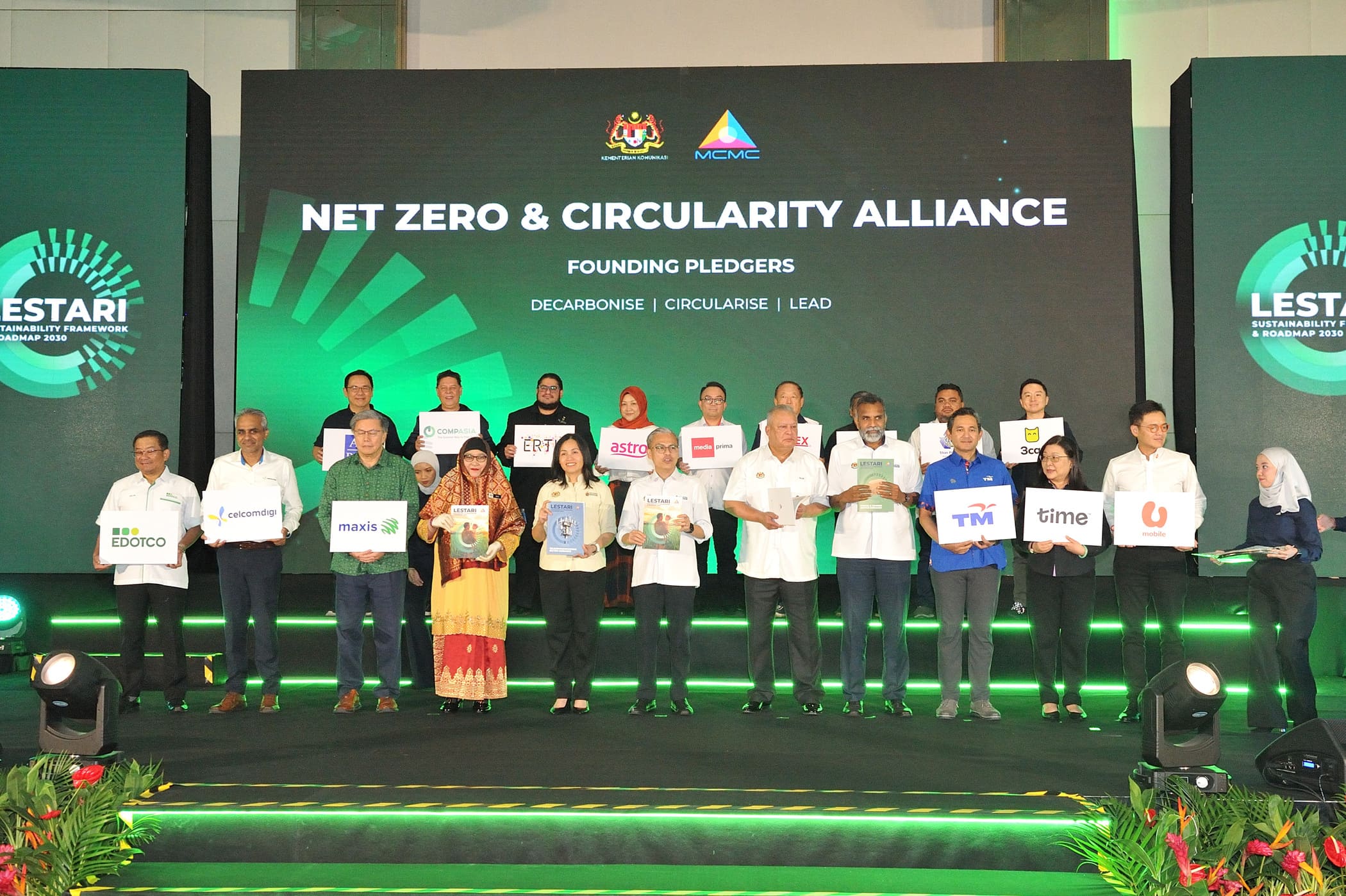
The implementation of LESTARI will be monitored regularly based on targets and indicators established together with the industry to ensure that each initiative achieves its intended outcomes. Also introduced is the Net Zero & Circularity Alliance (NZCA), an industry collaboration platform aimed at reducing carbon emissions and expanding efforts to collect, reuse and recycle devices in a more structured manner.
As an initial demonstration of commitment to the sustainability agenda of the communications and multimedia sector, 15 organisations from various segments of the digital ecosystem have signed a pledge of support for LESTARI and NZCA.
SOURCE Malaysian Communications and Multimedia Commission (MCMC)